 Русский
  Română
  Deutsch
  Français
  Türkçe
  Español
  Português
  Українська
  български
  Polski
  Indonesia
  中文 (中国)


































































































U2
-
 2 vCores
 -
 DDR4 4 GB
 -
 40 GB NVMe
 -
 Shared 100 Mbps
 Open Ticket
  +373 79 600002 info@alexhost.com
  Telegram Live Chat Telegram Official
  F.A.Q
F.A.Q  English























NVMe SSD, full root access, dedicated IPv4, and up to 1 Gbps. Choose a plan and deploy in minutes.


 2 vCores DDR4 4 GB 40 GB NVMe Shared 100 Mbps 2 vCores DDR4 4 GB 40 GB NVMe Shared 1 Gbps 2 vCores DDR4 4 GB 40 GB NVMe Shared 1 Gbps 2 vCores DDR4 4 GB 40 GB NVMe Shared 1 Gbps 2 vCores DDR4 4 GB 40 GB NVMe Shared 1 Gbps 2 vCores DDR4 4 GB 40 GB NVMe Shared 1 Gbps 2 vCores DDR4 4 GB 40 GB NVMe Shared 1 Gbps 2 vCores DDR4 4 GB 40 GB NVMe Shared 1 Gbps 4 vCores DDR4 8 GB 80 GB NVMe Shared 100 Mbps 4 vCores DDR4 8 GB 80 GB NVMe Shared 1 Gbps 4 vCores DDR4 8 GB 80 GB NVMe Shared 1 Gbps 4 vCores DDR4 8 GB 80 GB NVMe Shared 1 Gbps 4 vCores DDR4 8 GB 80 GB NVMe Shared 1 Gbps 4 vCores DDR4 8 GB 80 GB NVMe Shared 1 Gbps 4 vCores DDR4 8 GB 80 GB NVMe Shared 1 Gbps 4 vCores DDR4 8 GB 80 GB NVMe Shared 1 Gbps
 No plans in this price range.
Remote Windows VPS desktop features a technology, developed by well-known Microsoft corporation. This product named RDP represents access to Windows operational system desktop. Using such an access, client may easily realize remote computer management, directly from his working place.
VDS and VPS Windows desktop is provided for rent by AlexHost provider at the best prices of the IT market. We are talking about virtual servers, which are managed through the “remote desktop” tool. The designated server solution simplifies server administration greatly, and at the same time, allows you to run special software based on a powerful computer in the data center. Subsequently, such a PC can be used to solve a number of resource-intensive and large-scale tasks efficiently and quickly.
Remote Windows VPS desktop, created by Microsoft, features a technology guaranteeing access to the remote desktop. RDP tools allow connecting server with administrator’s PC via Internet. As a result, the designated administrator may:
The connection to the VPS with the Windows desktop is implemented using a network address, and the user is verified using a unique login and password combination. For the full technologies’ implementation, it is important to install VPS strictly on remote equipment. At the stage when the server is running the Windows operating system, RDP is already functioning on its platform and can be freely used. However, today RDP utilities are also developed for other, no less popular operating systems. Utilizing the remote desktop of the Windows VPS server, you can carry out complex server administration, use complex applications and implement various kinds of calculations. In a word, VDS is becoming an effective tool for processing BigData, which is regularly used to launch engineering software and various gaming services.
In order to connect to the remote desktop of the Windows VPS server, the RDP protocol is used. The presence of a specialized built-in application for its launch is based strictly on Windows. To achieve the mentioned goal while using other operating systems goal, you will need to spend time installing third-party utilities. You can rent a cheap Windows remote desktop VPS at AlexHost and get detailed advice on choosing and configuring a remote desktop Windows VPS server.
VPS remote desktop Windows 10, applicable to provide access to Windows servers (virtual solutions), is endowed with multiple advantages, including:
You may rent the remote Desktop Windows 10 VPS at an affordable price tag from AlexHost specialists. Get advice on the website or by phone and choose the best and most technologically advanced solution for your digital project. With the help of RDP, you can solve various enterprise-level tasks, managing business processes and increasing their efficiency.
Windows VPS Remote Desktop, provided by the reputable AlexHost provider, offers a contemporary solution for remote access to your server’s virtual desktop. With remote desktop functionality, you can seamlessly work with your server, even when it’s physically located in a different place. Here’s a step-by-step guide on how to work with a remote desktop and gain access to it:
It’s essential to prioritize the security of your remote desktop. This includes using strong, unique passwords and implementing additional server security measures. Remote Desktop is a powerful tool for remote work, and when used correctly, it can significantly simplify server administration and enhance your access to Windows VPS.
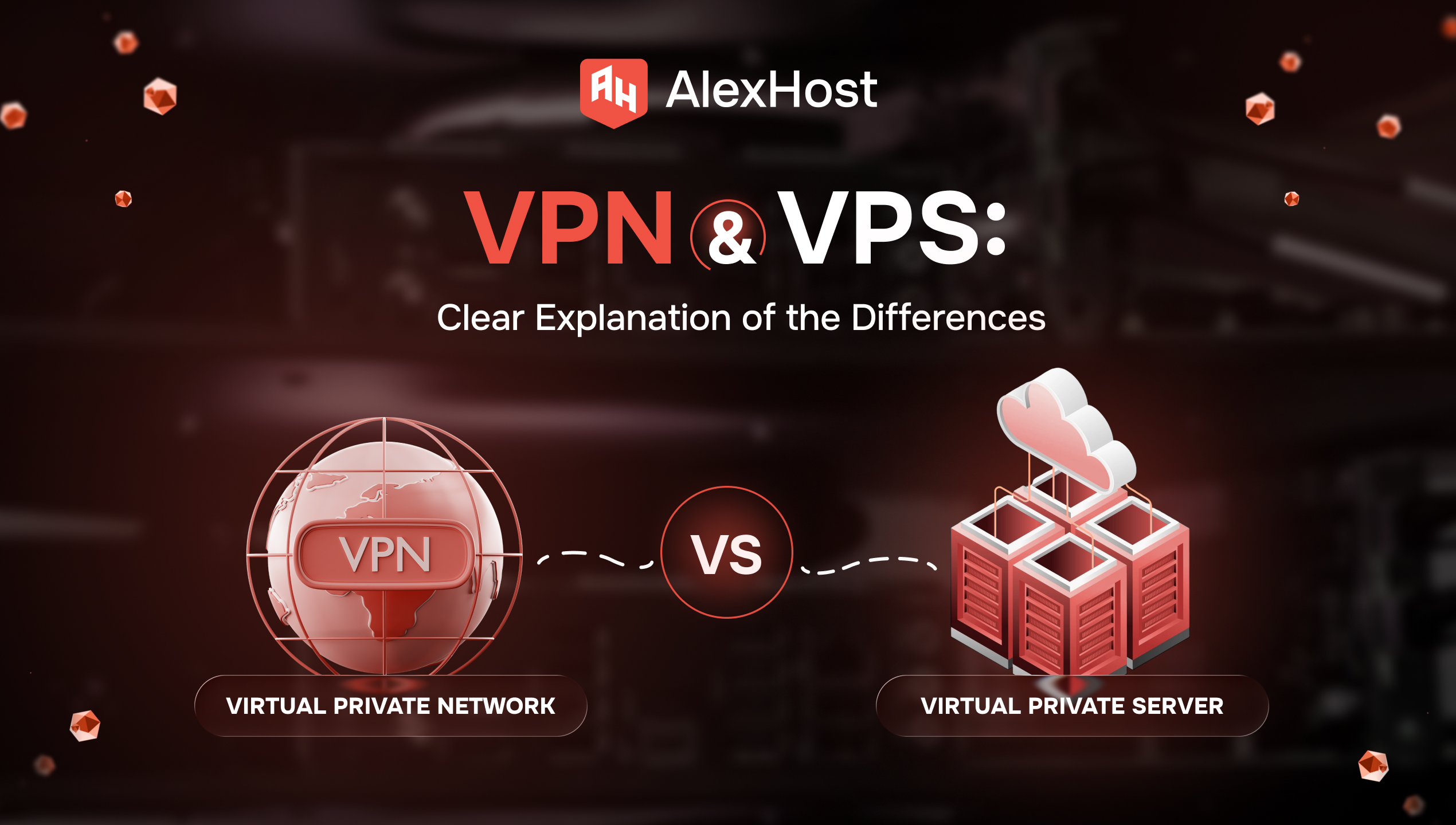
You open two tabs because you need one of two very normal things: safer browsing on public Wi‑Fi, or a server for a website, app, or self-hosted tool. Then the internet hands you two nearly identical acronyms — VPN and…

AlexHost introduces a major enhancement to its hosting ecosystem with the launch of a new VPS series built on the Intel Platinum 8268 platform. This release delivers a substantial leap in stability, processing power, and enterprise-grade performance — ideal for…
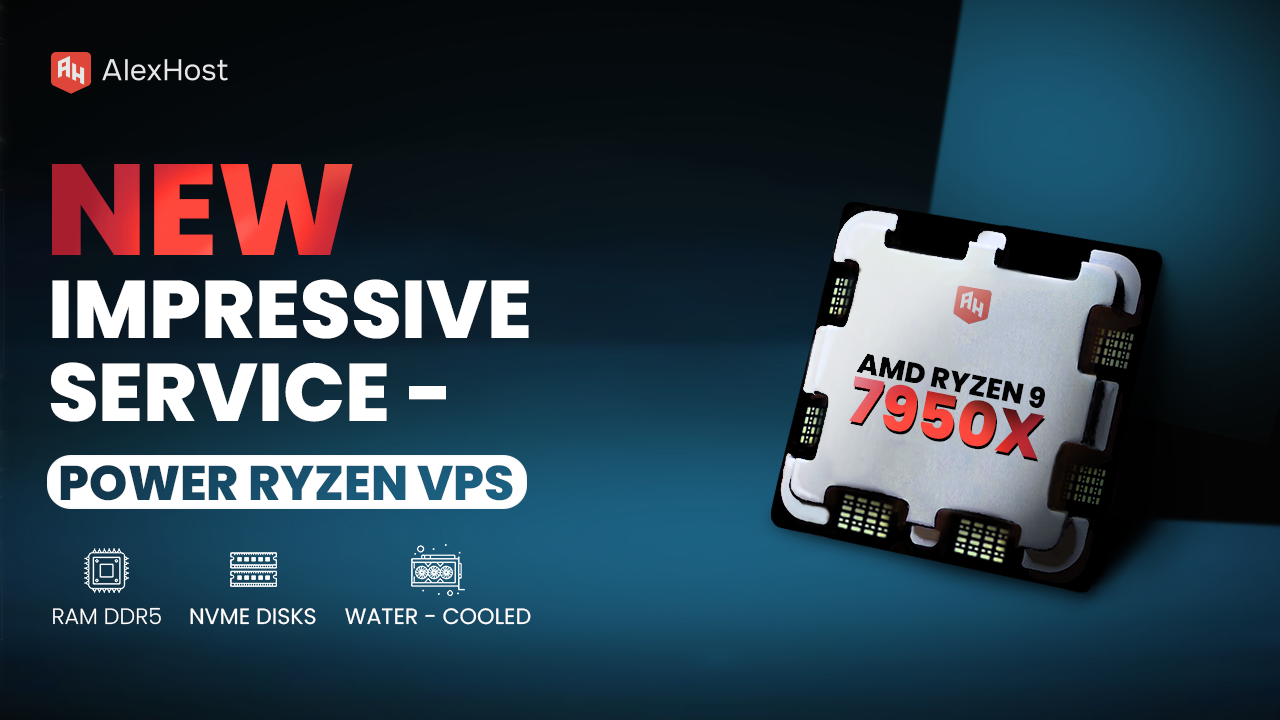
Ready to meet the growing needs of its customers, AlexHost is pleased to announce the launch of its new Ryzen VPS service, an essential tool designed to handle the complexities of modern business projects, regardless of their size or scale.…

Yellowdog Updater, Modified (YUM) is a robust package management utility in RPM-based Linux distributions, such as CentOS, Fedora, and RHEL (Red Hat Enterprise Linux). YUM simplifies the installation, updating, and removal of software packages. This guide delves into key YUM…
A single VPS server can technically host an unlimited number of domains — there is no hard-coded ceiling imposed by the technology itself. The real constraint is always resource capacity: CPU cores, RAM, disk I/O, and network bandwidth. In practice,…
Reinstalling the operating system (OS) on your Virtual Private Server (VPS) is a crucial task that ensures optimal performance, security, and compatibility with your applications. This guide will provide a comprehensive look at the importance of selecting and configuring the…
Cheap remote desktop Windows VPS today is considered one of the most effective solutions for corporate tasks of any complexity. Such remote desktops often turn out to be very convenient for managing the accounting department of an enterprise. The base is located on the enterprise’s server, and all employees get direct and secure access to it via remote desktop. Windows VPS remote desktops are also used in the format of a game server, or a platform for Forex trading, SEO or social network accounts promotion.
Windows 10 Remote Desktop VPS is a product that can be set up in just a few minutes. To do this, a server is created and an operating system is installed on its basis (in this case, Windows 10). Connection to remote desktop from a Windows environment will be initiated through the usual utility. When working with other operating systems, you will need to install additional software.
By renting a remote desktop Windows 10 VPS at AlexHost, you get a lot of new features. A private virtual server is essentially a powerful computer located in a data center. You will use Remote Desktop to connect to this computer and subsequently use the OS interface in a manner similar to how system administrators work with traditional I/O tools. As a result, the range of tasks that you can now solve is significantly expanding. Now you can handle even serious, resource-intensive tasks. Also, you get tangible savings (renting a server is more profitable than buying powerful equipment), a simplified administration process via remote desktop, and enough resources to work.
First, user finds the remote desktop client in the menu and launches it. Next, you need to type the remote server’s network address in the desired RDP window. Now you need to use your login and password - a unique link for a remote desktop. If you have any questions or difficulties, please, contact AlexHost technical support specialists.
Fast setup. No long-term contracts